सही Technology को एक काम करने वाले Business System में बदलें।
हम businesses को software और technology systems को configure, integrate, test और deploy करने में सहायता करते हैं ताकि वे business के काम करने के वास्तविक तरीके के अनुकूल हों।
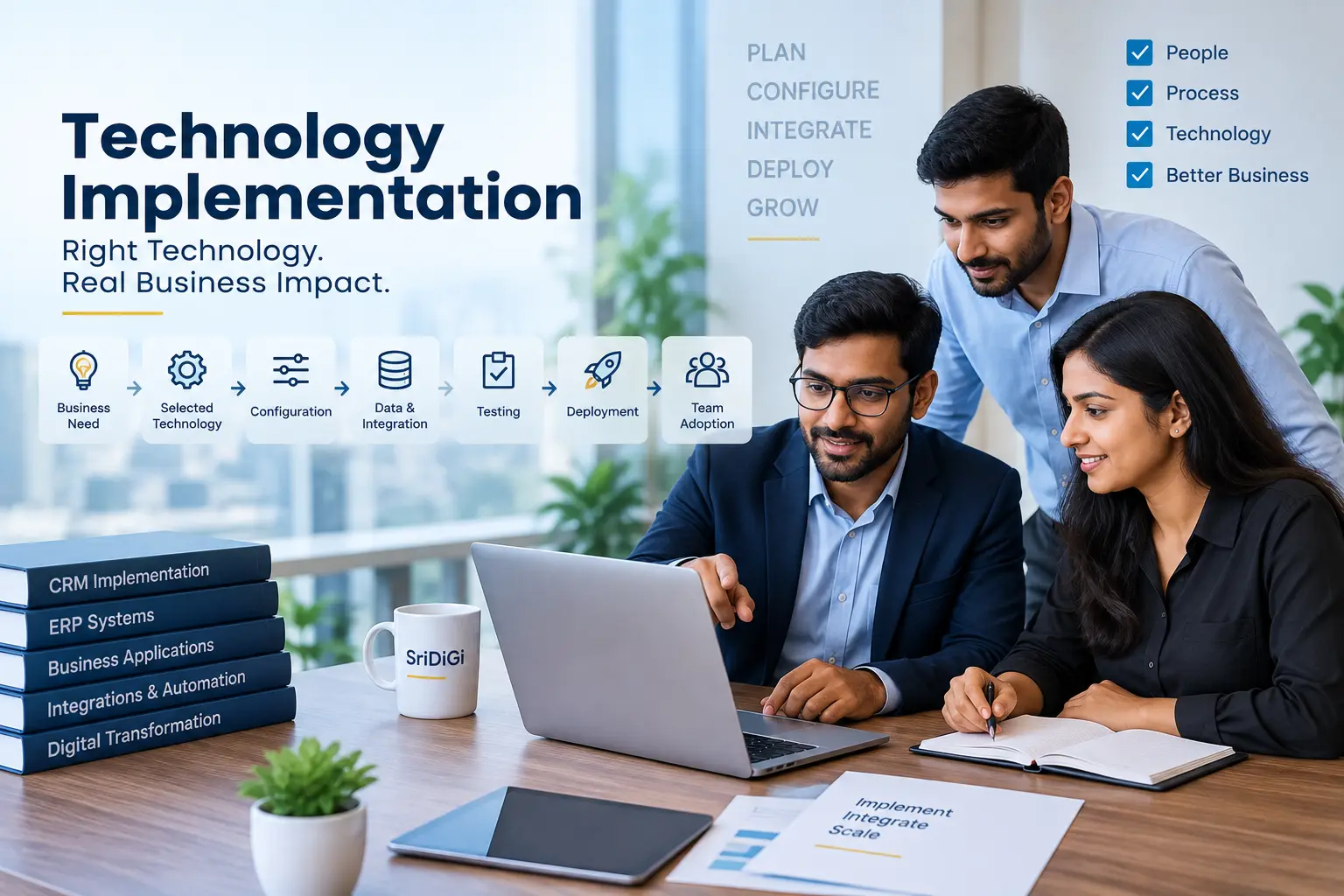
Implementation वह जगह है जहाँ Technology उपयोगी बनती है।
01 Business Fit
चयनित technology को वास्तविक business आवश्यकता के अनुसार configure करें।
02 System Connection
जहाँ तकनीकी रूप से समर्थित हो, प्रासंगिक systems को कनेक्ट करें।
03 Reliable Deployment
लाइव उपयोग में लाने से पहले implementation का परीक्षण (test) करें।
04 Team Adoption
Users को यह समझने में मदद करें कि नया system उनके काम में कैसे फिट बैठता है।
Technology चुनना केवल शुरुआत है। Implementation वह जगह है जहाँ technology business का हिस्सा बन जाती है।
Technology Implementation का क्या अर्थ है?
Technology implementation किसी चयनित software, platform, system या डिजिटल समाधान को लेने और उसे configure, integrate, test करने और उसे business environment में पेश करने की प्रक्रिया है।
Implementation प्रक्रिया केवल software खरीदने से अलग है।
Technology के चुनाव से Live Business System तक
हम किस Technology को Implement करने में मदद कर सकते हैं?
CRM Systems
Sales, customer और lead management platforms.
ERP / Business Systems
Integrated परिचालन (operational) और business-management systems.
Billing और Accounting
Business billing और financial-record workflows.
Inventory Systems
Stock और operational management platforms.
Customer Communication
Email, messaging या customer-service टूल्स।
Workflow / Automation
Platforms जो प्रक्रियाओं को जोड़ते हैं और tasks को automate करते हैं।
Analytics / Reporting
Dashboards और reporting वातावरण (environments)।
Custom Digital Systems
बिज़नेस-विशिष्ट software जहाँ एक tailored समाधान उपयुक्त हो।
Features से नहीं, Requirements से शुरू करें
Implementation से पहले, business requirements, user roles, वर्तमान systems और इच्छित workflows को समझा जाना चाहिए।
एक feature तभी उपयोगी होता है जब वह वास्तविक business आवश्यकता को हल करता है।
System और Business के बीच के अंतर (Gap) को पहचानें
Implementation में system के आधार पर configuration, process change, integration या सीमित customization शामिल हो सकता है।
System को Business के अनुसार Configure करें
विशिष्ट क्षमताएं (capabilities) चयनित platform पर निर्भर करती हैं।
- Users और Roles
- Permissions
- Workflow Stages
- Forms और Fields
- Notifications
- Reports
- Business Rules
- Templates
नए System में सही डेटा ले जाएँ
जहाँ कोई बिज़नेस किसी मौजूदा system से आगे बढ़ रहा है, वहाँ प्रासंगिक डेटा की समीक्षा, सफाई (cleaning), मैपिंग और migration करने की आवश्यकता हो सकती है।
उन Systems को कनेक्ट करें जिन्हें एक साथ काम करने की आवश्यकता है
Integration से systems को प्रासंगिक जानकारी का आदान-प्रदान करने और डुप्लिकेट काम को कम करने में मदद मिल सकती है, जहाँ तकनीकी रूप से समर्थित हो।
APIs और Integrations के माध्यम से Technology को कनेक्ट करें
जहाँ APIs, webhooks या समर्थित integration के तरीके उपलब्ध हों, systems कभी-कभी डेटा का आदान-प्रदान कर सकते हैं और workflows को ट्रिगर कर सकते हैं।
Implementation में Access और Security पर विचार किया जाना चाहिए
Security आवश्यकताएं technology और प्रोजेक्ट पर निर्भर करती हैं।
- User Roles और Permissions
- Authentication और Data Access
- Environment Separation
- Backups (जहाँ लागू हो)
- Secure Credentials
- Logging (जहाँ समर्थित हो)
Go-Live से पहले Test करें
Testing में सामान्य workflows और महत्वपूर्ण exception cases शामिल होने चाहिए।
FUNCTIONAL
क्या workflow काम करता है?
DATA
क्या जानकारी सही ढंग से जा रही है?
INTEGRATION
क्या कनेक्टेड systems सही ढंग से संवाद (communicate) करते हैं?
USER
क्या टीम अपना काम पूरा कर सकती है?
EXCEPTION
जब कुछ गलत होता है तो क्या होता है?
MOBILE / RESPONSIVE
जहाँ प्रासंगिक हो।
एक System तभी उपयोगी है जब Team उसका उपयोग कर सके
User adoption implementation का हिस्सा है क्योंकि एक तकनीकी रूप से काम करने वाले system को अभी भी इसका उपयोग करने वाले लोगों के अनुकूल होना चाहिए।
Test Environment से Live Operations की ओर बढ़ें
*जहाँ लागू हो।
हम Technology कैसे Implement करते हैं
एक विशिष्ट implementation प्रक्रिया।
Understand
बिज़नेस आवश्यकता को समझें।
Assess
चयनित technology और मौजूदा वातावरण की समीक्षा करें।
Plan
Implementation के दायरे, निर्भरता और मील के पत्थर (milestones) को परिभाषित करें।
Configure
सहमत आवश्यकताओं के अनुसार system को सेट करें।
Integrate
जहाँ समर्थित हो, प्रासंगिक systems को कनेक्ट करें।
Test
Workflows, डेटा और integrations का परीक्षण करें।
Deploy
Approved implementation को लाइव उपयोग में लाएँ।
Support
Adoption और लॉन्च के बाद के सुधार में सहायता करें।
क्या आपको Buy, Configure या Build करना चाहिए?
सही निर्णय business requirements, बाधाओं (constraints), बजट और दीर्घकालिक (long-term) जरूरतों पर निर्भर करता है।
BUY
जब कोई मौजूदा platform पहले से ही business की आवश्यकता को हल करता हो, तो उसका उपयोग करें।
CONFIGURE
किसी मौजूदा platform को workflow के अनुसार अनुकूलित (adapt) करें।
BUILD
जब standard विकल्प अपर्याप्त हों तो एक कस्टम system बनाएँ।
आपको Technology Implementation पर कब विचार करना चाहिए?
- आपने कोई software/platform चुना है लेकिन उसे सेट अप करने में मदद चाहिए।
- आपकी टीम system का लगातार उपयोग नहीं कर रही है।
- कई systems को जानकारी का आदान-प्रदान करने की आवश्यकता है।
- आप spreadsheets को एक structured system से बदल रहे हैं।
- आप किसी पुराने platform से migrate कर रहे हैं।
- आपका बिज़नेस manual tools से आगे बढ़ गया है।
- आपको केवल software खरीदने के बजाय एक नियंत्रित (controlled) implementation की आवश्यकता है।
Technology हमेशा पहला जवाब नहीं होती
कभी-कभी सही कदम समाधान को implement करने से पहले उसका पुनर्मूल्यांकन (reassess) करना होता है। Implementation सही पहला कदम नहीं हो सकता है जब:
- Requirements स्पष्ट नहीं हैं।
- प्रक्रिया (process) स्वयं टूटी हुई है।
- चुना गया system बिज़नेस के अनुकूल नहीं है।
- डेटा तैयार नहीं है।
- टीम adoption के लिए तैयार नहीं है।
- बिज़नेस को एक सरल समाधान की आवश्यकता हो सकती है।
सही Implementation दृष्टिकोण (Approach) चुनें
विभिन्न Businesses में Technology Implementation
Implementations के वैचारिक (conceptual) उदाहरण।
Retail
Billing + inventory + customer management.
Professional Services
CRM + project/process + billing workflows.
Real Estate
Website + lead system + CRM / follow-up.
E-commerce
Store + order management + customer communication.
Manufacturing
Inventory + operations + reporting.
Growing Businesses
Spreadsheets से कनेक्टेड business systems की ओर बढ़ना।
व्यावहारिक Business Tools लागू करें
स्मार्ट बिलिंग और बिज़नेस मैनेजमेंट सॉफ़्टवेयर जो businesses को बिलिंग, इन्वेंट्री और परिचालन (operational) records प्रबंधित करने में मदद करने के लिए डिज़ाइन किया गया है।
BillApp एक्सप्लोर करें →Real Estate उदाहरण: Lead Workflow को Implement करना
SriDiGi Property Lead System: एक पेशेवर रियल-एस्टेट वेबसाइट और lead-generation system जिसे property प्रस्तुति (presentation) और ग्राहक पूछताछ के इर्द-गिर्द डिज़ाइन किया गया है।
SriDiGi Property Lead System देखें →Technology Implementation से किसे लाभ हो सकता है?
Growing Businesses
Retail
Professional Services
Real Estate
E-commerce
Manufacturing
Startups
Multi-team Businesses
हमारा दृष्टिकोण
SriDiGi Technology Implementation में कैसे मदद कर सकता है
Business Fit
वास्तविक business आवश्यकता के अनुसार technology implement करें।
Structured Deployment
एक स्पष्ट implementation और testing प्रक्रिया का पालन करें।
Integration-Aware
जहाँ तकनीकी रूप से उपयुक्त हो, systems को कनेक्ट करें।
Adoption Support
Teams को implemented system को समझने और उसका उपयोग करने में सहायता करें।
अक्सर पूछे जाने वाले प्रश्न
सही Technology है लेकिन इसे काम करने में मदद चाहिए?
हमें बताएं कि आपके पास कौन सा system है, आप इससे क्या करवाना चाहते हैं और वर्तमान implementation कहाँ अटका हुआ है।
Technology implementation की आवश्यकताएं चयनित platform, business process, डेटा, integrations, तकनीकी वातावरण और प्रोजेक्ट के दायरे के आधार पर भिन्न होती हैं। इस पृष्ठ पर दी गई जानकारी सामान्य सेवा जानकारी के लिए है और इसे technology, कानूनी, वित्तीय या बिज़नेस सलाह के रूप में नहीं माना जाना चाहिए। व्यक्तिगत प्रोजेक्ट के लिए विशिष्ट implementation सिफारिशों का मूल्यांकन किया जाना चाहिए।